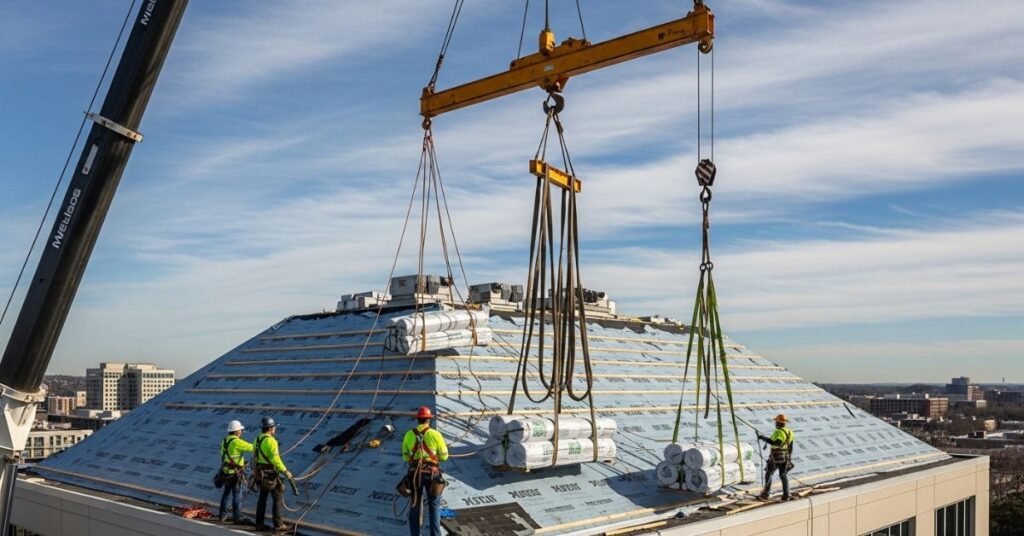

Roofing projects often look straightforward from the ground, but anyone in construction knows that safely and efficiently getting materials to the roof is one of the most complex parts of the job. From lifting bundles of shingles to placing structural components such as trusses and steel beams, proper rigging is critical to both safety and productivity.
Without the right lifting approach, roofing crews face higher risks, longer timelines, and unnecessary strain on workers. With professional rigging equipment and techniques, however, contractors can streamline operations, reduce hazards, and ensure materials are placed exactly where they are needed.
The Challenge of Moving Materials to the Roof
Roofing materials are bulky, heavy, and often awkward to handle. Shingles, underlayment rolls, insulation boards, and prefabricated trusses must be moved from ground level to elevated work areas. On larger residential or commercial projects, this can require lifting thousands of pounds of material over extended periods.
Manual handling alone is neither practical nor safe for these tasks. Carrying materials up ladders increases the risk of falls, strains, and dropped loads. Even smaller projects benefit from mechanical lifting solutions that reduce physical stress and improve consistency.
This is where rigging equipment becomes essential. By using properly rated lifting gear, roofing contractors can move materials in a controlled, efficient manner.
Key Rigging Equipment Used in Roofing Projects
Several types of rigging tools are commonly used to support roofing operations. Each plays a specific role in securely lifting and positioning loads accurately.
Synthetic Slings
Synthetic web and round slings are widely used to lift roofing materials because they are lightweight, flexible, and less likely to damage finished surfaces. They conform easily to loads such as bundles of shingles or stacks of plywood, providing a secure grip without crushing or scratching the materials.
Wire Rope Slings
For heavier or more rugged loads, wire rope slings offer greater durability and strength. They are often used to lift structural components, such as steel beams or large trusses, that require higher load capacities and resistance to abrasion.
Spreader Bars
Spreader bars are essential for lifting long or wide roofing components. They help distribute the load evenly and maintain proper spacing between lifting points, reducing stress on the material and preventing bending or deformation during lifting.
Chain Slings
Chain slings are commonly used in demanding environments where durability is critical. They are ideal for lifting heavy roofing equipment or structural elements and can withstand harsh job-site conditions.
Hoists and Winches
On smaller projects or tight job sites, manual or powered hoists can lift materials directly to the roof. These systems provide controlled lifting and are especially useful when crane access is limited.
Beam Clamps and Anchor Points
Beam clamps and temporary anchor points allow rigging systems to be securely attached to structural elements. This is especially useful when lifting materials in partially completed structures or when setting up lifting systems for roof access.
Improving Safety on Roofing Sites
Safety is one of the most important reasons to use rigging equipment on roofing projects. Working at height already poses significant risk, and improper material handling only increases the danger.
Using rigging equipment helps reduce:
- Manual-lifting injuries, such as strains and sprains
- Dropped materials that could injure workers below
- Unstable loads that shift during lifting
- Overexertion from repeated heavy lifting
Proper rigging also ensures that loads are balanced and secured before they leave the ground. This minimizes unexpected movement during lifting, which is especially important when working near roof edges or over occupied areas.
In addition, using rated equipment with clearly defined working load limits enables contractors to plan lifts with confidence. This level of control is critical to maintaining a safe job site.
Increasing Efficiency and Productivity
Beyond safety, rigging equipment significantly improves efficiency on roofing projects. Time spent manually moving materials can quickly add up, especially on larger projects.
With the right rigging setup, crews can:
- Lift multiple bundles of shingles at once
- Position materials closer to the installation site
- Reduce trips up and down ladders
- Keep roofing crews focused on installation rather than material handling
For example, using a crane with properly configured slings and a spreader bar allows entire pallets of materials to be lifted directly onto the roof. This eliminates repeated manual handling and accelerates the project timeline.
Even on smaller residential jobs, simple hoisting systems can significantly boost productivity. Materials can be delivered quickly and consistently, helping crews maintain momentum throughout the day.
Supporting Precision and Placement
Roofing often requires materials to be placed in precise locations. Whether setting trusses, aligning panels, or staging materials for installation, precision is essential.
Rigging equipment enables operators to control load movement with precision. Tag lines, balanced lifting configurations, and proper sling selection all contribute to precise placement. This reduces the need for repositioning and minimizes the risk of damage to materials or surrounding structures.
Spreader bars, in particular, are valuable for maintaining stability during lifts. By keeping lifting points evenly spaced, they help ensure that long components remain level and easier to position.
Choosing the Right Rigging Setup
Selecting the appropriate rigging equipment for a roofing project depends on several factors:
- The weight and size of the materials to be lifted
- The height and accessibility of the roof
- The available lifting equipment, such as cranes or hoists
- Job site conditions, including space constraints and weather
Contractors should always verify that all rigging components are rated for the intended load and are regularly inspected. Using the correct configuration not only improves performance but also ensures compliance with safety standards.
The Value of Professional Rigging in Roofing
As roofing projects become more complex and timelines more demanding, the role of rigging continues to grow. Professional rigging practices enable contractors to handle larger materials, complete projects faster, and maintain a higher level of safety.
From synthetic slings and spreader bars to hoists and beam clamps, each piece of equipment contributes to a more efficient workflow. When used properly, these tools transform how materials are moved and installed on roofing projects.
In the end, successful roofing is not just about what happens on the roof. It starts at ground level, with the systems and equipment used to deliver materials safely and efficiently.